How it works
From the programme to the hall door. And then on its own.
Seven steps from the programme to the screen. After that, nobody touches them again.
Step by step
The seven steps in detail
- 01
Programme
Your programme source, polled on a schedule and on demand. A house system with its own export gets a matching adapter.
- 02
Venue
Each stage or hall arrives as a location, named the way the programme names it: “Main Hall”, “Studio Theatre”, “Studio”.
- 03
Screen
Screens are bound to the locations they serve. Only this binding tells a layout which stage to show. A screen bound to nothing stays empty on purpose.
- 04
Layout
Zones on a grid: performance detail, week view, sponsor strip, media, ticker, clock, live web view. Starter templates cover almost every real request.
- 05
Playlist
What plays, in what order, for how long. With cut, fade or crossfade, and playlists that contain other playlists.
- 06
Schedule
When and where: a screen or a whole group, always-on, one-shot, or recurring. Built in plain language.
- 07
On screen
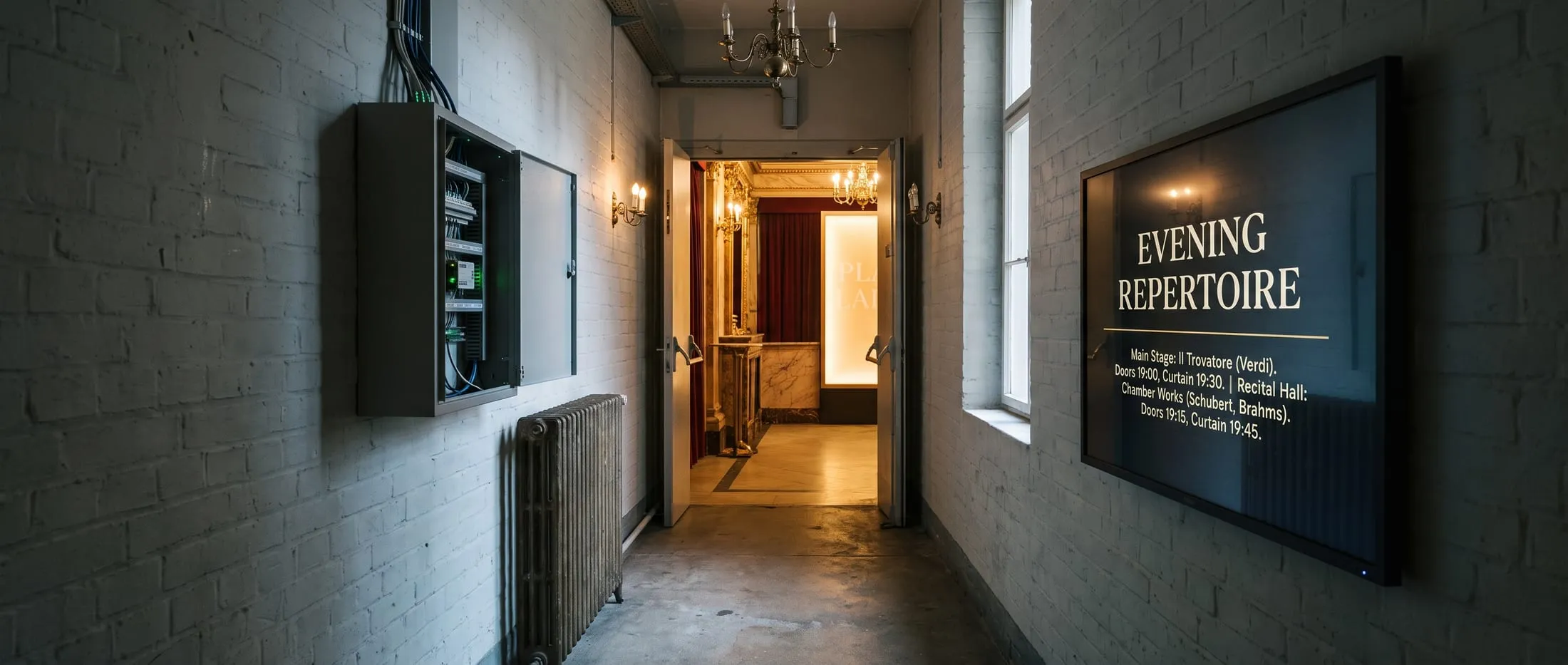
The player pulls its own schedule, caches everything it needs and plays it, including through a network outage.
Your season already exists. Put it on your walls.
A demo takes half an hour and shows signage42 live, from the hall door to the interval notice. Bring the questions of your house.